
If there’s one thing I’ve learned over the last several years writing for AccessAlly, it’s that with the right entrepreneurial mindset, you can turn just about anything into a business.
I’m reminded of it every time I scroll through our client showcases—the range of ideas, experiences, and backgrounds—and how what started as a skill, a process, or even a personal solution turned into something other people were willing to pay for.








Every one of them started somewhere. Not with a full business plan or a perfectly mapped-out offer, but with something they knew, something they had worked through, or something they had figured out well enough to share—and then made the decision to do something with it.
If that’s where you are now (and you can already see yourself as our next successful AccessAlly-powered business story) the next step isn’t more inspiration. It’s figuring out how to take your idea and turn it into something structured, sellable, and built to hold up as a real knowledge commerce business.
In this article, we’re going to break down what “knowledge commerce” really means and how it all comes together—from choosing the right way to package your expertise and what those first steps look like when you’re starting to build a business around it.
What is Knowledge Commerce?
Before you actually do a search on “ what is knowledge commerce”, it’s easy to assume that it’s just a fancier way of saying “online learning”.
Knowledge commerce is the bigger-picture business idea that makes online learning possible—with courses, coaching programs, memberships, workshops, and digital downloads simply the ways it shows up.
At its core, knowledge commerce is the business of packaging what you know into something people can buy—turning your expertise into something structured, repeatable, and designed to deliver a clear result.
Is Knowledge Commerce for You?
Knowledge commerce tends to be a natural fit if you’re someone who:
- Has a defined area of expertise—not just an interest, but something you understand at a deeper level through real experience
- Finds yourself explaining things often—the go-to person people rely on when they need help figuring something out
- Wants to reach more people than your current setup allows, without being limited to one-on-one time or a smaller audience
But having something to share is only part of it. The other half of this is deciding whether you actually want to turn it into a business. That’s where a different set of questions comes in:
- Do you have a specific enough expertise to teach? Passion for a subject and genuine expertise in it aren’t the same thing. What you’re looking for is depth — a level of understanding that comes from real experience, real application, and real results.
- Do you actually want to teach it? Knowledge commerce rewards people who genuinely enjoy breaking things down, guiding someone through a process, and helping others get results.
- Are you approaching this as a business or a side experiment? Knowledge commerce can absolutely start small, or even be a side gig— but the people who build something sustainable treat it with the same intention they’d bring to any real business: time, consistency, and a willingness to keep showing up before the revenue does.
If you’re somewhere in the middle—where you know you have something, but you’re not quite sure how to shape it yet—you’re exactly where most people start, and exactly where you need to be reading this.
Choosing the Right Knowledge Commerce Format
There’s no one-size-fits-all answer here—but there is a right fit for what you know and how you naturally teach.
The format you choose shapes how people experience what you’ve built, and that starts with how you decide to package it. Here are a few of the most common formats:
Online Courses
If you’ve ever thought, I wish I could walk more people through this without repeating myself 100 times a week, a course is probably what you’ve been picturing.
Courses let you organize your expertise into a clear, structured experience. There’s a starting point, a progression, and an end result people are working toward. Lessons, modules, exercises—it all builds in a way that helps someone move from where they are to where they want to be.

They take time to create upfront, but once they’re built, they’re built. Whether ten people go through it or ten thousand, the delivery stays the same—which is what makes courses one of the most scalable ways to share what you know.
Coaching Programs
If your strength is in real-time feedback, reading between the lines, and helping someone adjust based on their specific situation (not so structured into a set curriculum), online coaching might be a better fit.
In a coaching program, people aren’t just getting your knowledge—they’re getting your perspective. Your ability to respond, guide, and help them move forward in a way that’s tailored to them.
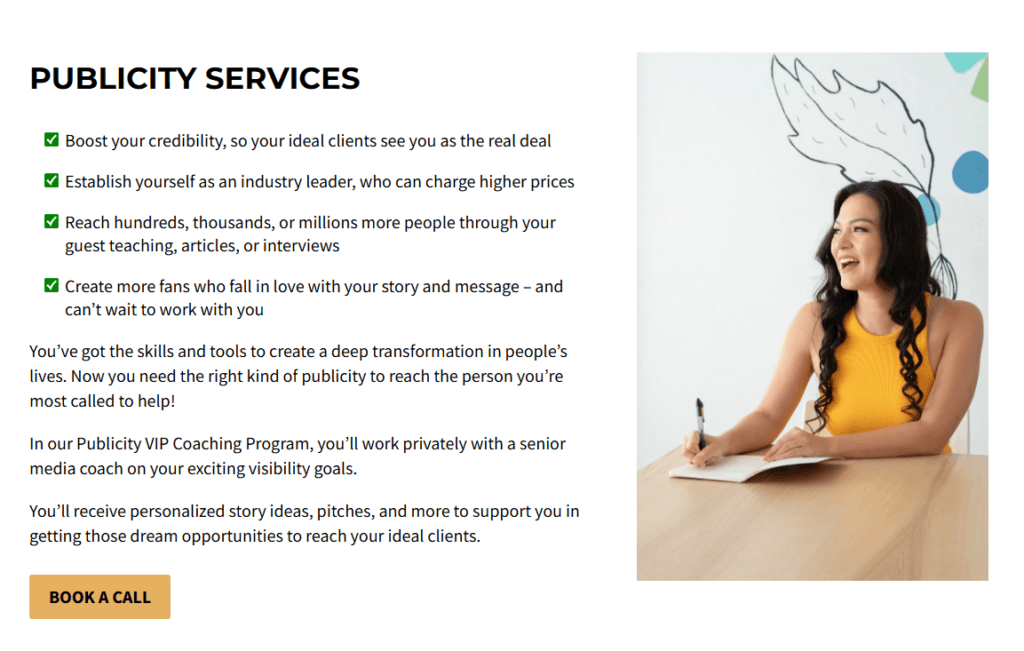
That level of access is what makes coaching so valuable, but it also means your time is part of the offer. It doesn’t scale the same way a course does, which is why many people eventually pair coaching with something more structured.
Memberships and Communities
A membership is less about a single outcome that a course or coaching program provides, and more about ongoing access.
Instead of a one-time experience, you’re creating a space where people stay connected to your expertise over time—through new content, shared discussions, and the kind of consistency that keeps them coming back.

And because people pay to remain part of that experience, memberships introduce something the other formats don’t: recurring revenue. That monthly or annual income is what makes it one of the most financially sustainable businesses you can build around your expertise.
Read More 👉 7 Great Recurring Revenue Business Ideas
Digital Downloads
For the buyers who aren’t ready to commit to any type of “experience”, the most valuable thing you can offer instead is something practical, focused, and immediately useful.
A digital download is your expertise captured in its most accessible form — an ebook, a guide, a template, or a workbook that your buyer owns, something they can open on their own time and work through at their own pace, long after the purchase.
Digital downloads are typically the fastest knowledge commerce format to build and the simplest to deliver — making them more suitable as a first touchpoint for a new audience, or a practical resource that adds tangible value to a larger course or membership you’re already running.
. . .
💡Something important to keep in mind: Most knowledge commerce entrepreneurs (aka edupreneurs ) don’t stay in just one format forever. It’s common to start with one, then expand over time.
A course might lead to a membership. Coaching might turn into a program. A download might evolve into something more in-depth.
What matters is starting with something that fits where you are right now—something you can realistically build and deliver.
Building the Business Behind Your Knowledge Commerce Format
You have your expertise. You have your format. Now you’re staring at the part that actually makes this real—because knowing what you want to build and actually building it are two very different things.
Here’s what it looks like to start closing that gap.
Define the Outcome Before You Build the Offer
The knowledge commerce businesses that gain traction the fastest aren’t always the ones with the most expertise behind them—they’re the ones with the clearest promise.
- Not “I help busy moms get healthier” → but “I help working moms build a 30-minute weekly meal prep routine they can actually stick to”
- Not “I teach people how to budget” → but “I help freelancers manage inconsistent income with a monthly budgeting system”
- Not “I share home organization tips” → but “I help families reset their homes with simple systems that keep things from piling back up”
- Not “I give career advice” → but “I help mid-level professionals position themselves for promotions and higher-paying roles”
- Not “I help with nutrition” → but “I help beginners plan balanced meals without tracking every calorie”
The difference isn’t just in the wording — it’s in how immediately a buyer can see themselves in what you’re offering and know it’s exactly what they need.
And those are the people who don’t just buy—they follow through, get results, and become the proof that your business works.
The more specific the outcome, the easier everything else becomes—your pricing, your messaging, your positioning, and the content you create to support it.
📄 Learn How to Create Your First Offering in AccessAlly
Start Showing Up Before You Have Something to Sell
Knowledge commerce isn’t a “build it, and they will come” type of business. It means you start showing up before there’s anything to sell—where your ideal buyer is already spending their time.
- Landing in their inbox with a weekly newsletter they actually look forward to opening
- Publishing content on your blog that answers the exact questions they’re already searching for
- Being active on social media—not just posting, but responding, starting conversations, and staying part of them
- Creating or joining free online spaces where your audience gathers and engages in conversion, like a Reddit thread
- Starting a podcast or showing up as a guest so people can hear how you think, how you teach, and how you explain things
That consistency is what builds familiarity. And familiarity is what turns a stranger into someone who pays attention, trusts your perspective, and eventually buys from you.
Most people aren’t buying a $500 course from someone they found yesterday. They follow for a while. They pay attention. They see how you think, how you teach, how you explain things.
That’s what builds the confidence to buy—and it’s why showing up now matters, even before you have something ready.
Set a Price That Attracts the Right People
When you’re building a knowledge commerce business for the first time, one of the easiest traps to fall into early on is pricing too low. It feels safer, more approachable, and less likely to scare someone off.
Read 👉 A Beginner’s Guide to Pricing Online Courses
But pricing doesn’t just affect sales—it shapes who you attract and how seriously your offer is taken. The right price brings in people who are invested in the outcome, who show up ready to follow through, and who value what you’ve built.
A good place to start is looking at what similar offers cost in your space. That gives you a baseline for what people are already willing to pay.
From there, think about the result you’re helping someone achieve, how specific that result is, and how clearly your offer delivers on it. That’s what your pricing should reflect—not just the time it took to create it.
Build the Setup that Turns Your Idea Into a Business
Everything we’ve covered in this article ultimately leads here. You’ve got your expertise, your format, and the makings of a business plan—now you need a way to actually build and sell. Because without a platform, it’s still just an idea.
Your course, membership, coaching program, or download needs a place to exist, a way for people to buy it, and a system that delivers what you’ve promised.
The platform you choose ends up shaping how your business runs day to day. The right one takes care of the behind-the-scenes so you can stay focused on creating, teaching, and supporting the people who invest in what you’ve built.
And as your business grows, it grows with you — being able to handle additional responsibilities with course delivery, community management, payment processing, and student tracking all in one place instead of scattered across tools that were never meant to work together.
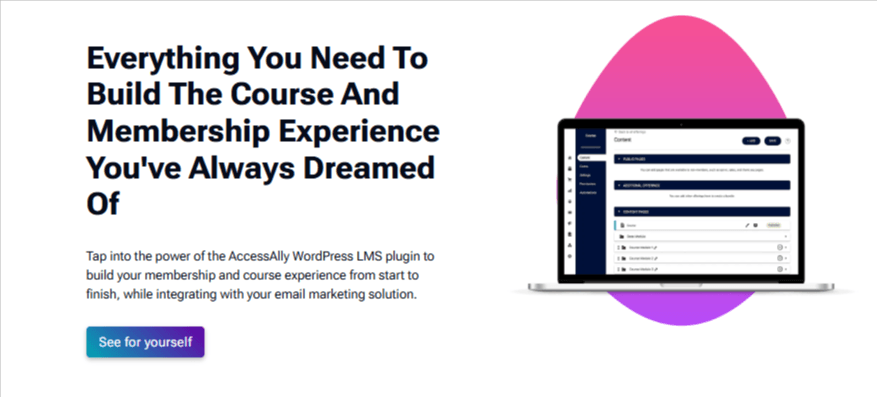
That’s exactly what AccessAlly is built for — an all-in-one platform for course creators, coaches, and membership site owners who are ready to build and sell their knowledge online.
Your Knowledge Commerce Business Starts Here
At this point, the next step is putting a real version of your idea into place—something you can clearly explain, stand behind, and start getting in front of the right people.
You don’t need every detail figured out before you do that. What matters is that what you’re building is specific enough for someone to recognize it’s meant for them, and structured enough that they can move through it and get a result.
That might look like:
- Turning your process into a step-by-step course someone can work through on their own time
- Packaging your expertise into a coaching program where you guide people through it live
- Creating a membership where people stay connected to your content, your guidance, and each other
- Offering a focused digital resource—a guide, template, or system—that solves one specific problem
- Combining formats as you grow, layering in new offers based on what people need next
From there, you’ll start to see how people respond, what they need more of, and where things can go deeper. Until one day you’ll look back and clearly see how your offer improved, your content sharpened, and how a simple idea turned into a thriving business.